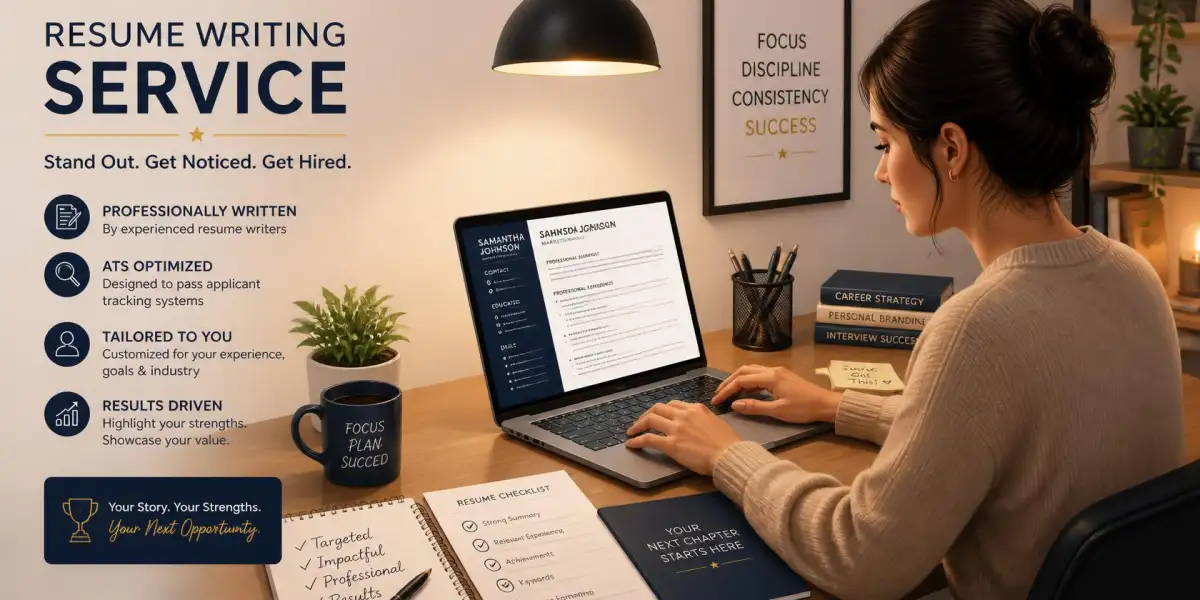

Introduction
A CV or resume is often one of the first documents an employer sees when considering a candidate. It provides a brief overview of professional experience, education, skills, achievements, and career interests.
Despite its importance, many applicants find it difficult to decide what information to include or how to present their experience effectively. Some CVs contain too much detail, while others fail to explain the candidate's most relevant strengths.
A strong career document should make it easy for a recruiter or hiring manager to understand what the candidate can contribute. This requires careful organization, concise writing, and attention to the requirements of the position.
Start With Your Career ObjectiveBefore writing a CV, candidates should consider what type of role they are targeting.
A document designed for a graduate position may look different from one prepared for a senior professional role.
Candidates can begin by identifying:
- Their target job
- Relevant industries
- Key professional strengths
- Important qualifications
- Transferable skills
- Long-term career direction
Having a clear objective makes it easier to decide which information deserves the most attention.
Instead of creating one generic document for every application, candidates can adjust relevant sections according to the role.
Choose the Right CV StructureA clear structure allows employers to find important information quickly.
A professional CV may include:
Contact Information
Provide appropriate contact details and ensure they are accurate.
Professional Profile
Write a short introduction describing professional background, strengths, and career direction.
Employment History
List relevant positions, responsibilities, achievements, and important contributions.
Education
Include qualifications, institutions, and relevant academic achievements.
Skills
Highlight technical, professional, and transferable skills relevant to the target role.
Additional Information
Depending on the position, this may include certifications, languages, professional memberships, projects, or volunteering experience.
The exact structure should be adapted to the candidate's experience and industry.
Focus on Achievements Instead of DutiesOne common CV problem is describing every job using only basic responsibilities.
For example:
Responsible for managing customer enquiries.
This tells an employer what the person did but does not explain the impact of their work.
A stronger description might explain the contribution:
Managed customer enquiries across multiple communication channels and helped improve response efficiency through organized case tracking.
Candidates should consider what they achieved, improved, managed, created, or contributed to.
Where appropriate, measurable results can make descriptions more informative.
Use Clear and Professional LanguageA CV does not need complicated vocabulary.
Professional writing should be concise and specific.
Candidates should avoid:
- Excessive repetition
- Very long paragraphs
- Unnecessary jargon
- Informal expressions
- Vague statements
- Spelling and grammar mistakes
Action-oriented language can make experience descriptions more direct.
Useful verbs may include:
- Managed
- Developed
- Coordinated
- Improved
- Analyzed
- Designed
- Supported
- Delivered
- Organized
- Implemented
The goal is to communicate professional value efficiently.
Tailor Your CV to the PositionA strong CV should reflect the requirements of the role being targeted.
Candidates should carefully read the job description and identify:
- Required qualifications
- Technical skills
- Experience requirements
- Industry knowledge
- Personal competencies
- Responsibilities
Relevant experience should receive greater attention.
For example, someone applying for a marketing position may emphasize campaign planning, content development, analytics, and communication experience rather than giving equal space to unrelated responsibilities.
Tailoring does not mean changing facts. It means presenting genuine experience in the most relevant way.
Make Your Skills Easy to UnderstandSkills sections should be specific rather than overly broad.
Instead of simply writing:
Communication
a candidate could specify:
Client communication, presentation development, professional email communication, and stakeholder coordination.
Technical skills should also be described accurately.
Candidates should avoid listing software, technologies, or qualifications they cannot confidently discuss during an interview.
A CV should represent genuine abilities.
Education and Early Career ExperienceStudents and recent graduates may worry that they do not have enough professional experience.
However, relevant experience can come from different sources.
Candidates can consider:
- University projects
- Internships
- Part-time employment
- Volunteering
- Student societies
- Freelance projects
- Industry placements
- Academic research
For example, a university research project may demonstrate analytical ability, while participation in a group project may demonstrate collaboration and project organization.
The key is to explain the skills developed rather than simply listing activities.
How Native Assignment Help Can Connect With Career DevelopmentAcademic experiences can provide useful evidence for a CV when presented appropriately.
For example, students who have used Native Assignment Help as an educational resource may develop stronger approaches to research, academic writing, organization, and project planning.
However, candidates should focus their CV on genuine skills and achievements rather than simply naming an external academic resource.
A university project, research assignment, presentation, or independent study activity can be described in terms of the skills it helped develop.
This allows academic experience to become relevant professional evidence.
Keep the Design ProfessionalGood CV design should support readability rather than distract from the content.
Candidates should consider:
- Consistent headings
- Clear spacing
- Easy-to-read fonts
- Logical section order
- Appropriate use of bold text
- Consistent date formatting
- Balanced page layout
Avoid excessive graphics, decorative elements, or complicated formatting unless they are genuinely appropriate for the industry.
Creative roles may allow more visual flexibility, while traditional professional sectors may benefit from a simpler presentation.
Proofread Before SendingSmall mistakes can undermine an otherwise strong application.
Before submitting a CV, candidates should check:
- Spelling
- Grammar
- Job titles
- Dates
- Contact details
- Company names
- Formatting
- Consistency
- File name
It can also help to read the document from the employer's perspective.
Ask: Can I understand this candidate's main strengths within a few moments?
If the answer is unclear, the document may need further editing.
Use a CV as a Career Document, Not a Complete BiographyA CV does not need to contain everything a person has ever done.
Its purpose is to present the experience and skills most relevant to the professional opportunity.
Candidates should prioritize quality over quantity.
Older or unrelated information may require less space, while recent and relevant achievements can receive greater emphasis.
This creates a more focused document and allows important information to stand out.
ConclusionCreating a professional CV or resume requires thoughtful planning, clear writing, relevant information, and careful presentation. Candidates need to understand their career objectives, identify their strongest evidence, describe achievements clearly, and tailor their applications to appropriate opportunities.
A Resume & CV Writing Service in UK can provide useful guidance with structure, wording, formatting, professional profiles, achievement descriptions, and final proofreading. Students and graduates can also draw on genuine academic experiences to demonstrate transferable skills such as research, communication, organization, and project management.
The most effective CV is not necessarily the longest or most visually elaborate. It is the document that communicates a candidate's relevant experience and capabilities clearly, accurately, and professionally. By regularly updating their CV and adapting it to suitable opportunities, job seekers can maintain a stronger foundation for their ongoing career development.